Stories, insights, must knows, home DIYs, tips & tricks that can guide you buy, sell or improve your home.
Thursday, September 21, 2017
7 Home Maintenance Tasks Homeowners Should Master
Whether you're a first-time homeowner or a seasoned veteran in homeownership, there are a few home maintenance tasks that all homeowners should master in order to keep their home in tip-top shape. Use these seven tasks as a general guide:
Thursday, September 7, 2017
Potential Storage Spaces You're Overlooking
Finding storage in a small room is no easy feat, especially if you’re
short on closets and cabinets. Try one of these ideas for squeezing
extra storage out of overlooked spaces.
source: hgtv.com
Behind Doors
For every door in your house there is a space behind that door just begging to be used. Cassie Freeman of Hi Sugarplum covered the wall behind her laundry room door with a functional shelving system to organize her cleaning supplies.Under Cabinets
Emily Lewis of Greens and Jeans added toe-kick drawers beneath her counters to expand on space in her cozy kitchen. She uses the drawers to store place mats, tablecloths, baking pans and other items that get minimal use.Side of the Bed
If you don’t have enough space for a bedside table, get a bedside caddy to store your phone, books and other nighttime essentials. Kikkerland’s Felt Bedside Caddies slip right into your bed frame or between your mattress and box spring.Above Doors
The dead space between a door and ceiling is a perfect place to add a shelf for extra storage. Jordan Hurd of The 2 Seasons installed this simple shelf above her bathroom door to hold extra towels in a space-challenged bathroom.Head of the Bed
Stow small items or nighttime necessities in a headboard with built-in shelves. Ikea’s affordable Brimnes headboard is ideal for keeping books and magazines from piling up on the floor by your bed.Ceiling
Mount sturdy racks to your garage ceiling for storage of bulky bins, pet carriers and all those other rarely used items that take up space in the main house. SafeRacks offers racks that can hold up to 600 pounds.Inside Shelves
Maximize your storage space with some floating shelves that double as drawers, such as Ikea’s Ekby Alex shelves. The design allows you to store items inside the shelves as well as on top of them.source: hgtv.com
Wednesday, August 16, 2017
4 Ways to Buy a Home With No Money Down
If you have the income to make a monthly mortgage payment, but haven’t got a big stash of cash for a down payment may be able to buy a home with a low- or no-down payment loan.
Here’s the inside scoop on four loan options for cash-strapped homebuyers:
If you have excellent credit and plenty of income, you might qualify for a no-money-down home loan from credit union. Navy Federal, for example, offers the HomeBuyers Choice to all its 4 million-plus members.
The NASA Federal Credit Union’s 100% financing is limited to its home base in the Maryland, Pennsylvania, Virginia or the District of Columbia.
Other credit unions may also allow members to pledge their savings (or in the case of second home buyers, their primary home equity) to guarantee a low- or no-down payment mortgage.
If you’re currently in military service, you’re a veteran or you’re the surviving spouse of a service member, you can use VA’s loan guarantee program to buy a home costing up to $417,500 in many areas (or up to more than $1 million in high-cost areas).
You do have to have good credit, show you can afford the loan and meet rules about length of service.
If you want to buy a condo or coop with a VA loan, the project has to be approved. Reservists can use the program, too.
To use the USDA’s Rural Development Guaranteed Loan Program you have to be a low- or moderate income consumer buying in a rural area. Not only can you buy without a down payment, you can also roll the cost of your loan guarantee fee into the mortgage to cut down the cash you have to bring to the closing table.
There are state housing authority and local homebuying programs that sometimes offer low- and no-money down loans for buyers who meet income guidelines. You can contact me to get more information about those programs.
Contact me if you'd like more information about any of these programs.
source: HomeActions
Here’s the inside scoop on four loan options for cash-strapped homebuyers:
1. Credit Union Loans
If you have excellent credit and plenty of income, you might qualify for a no-money-down home loan from credit union. Navy Federal, for example, offers the HomeBuyers Choice to all its 4 million-plus members.
The NASA Federal Credit Union’s 100% financing is limited to its home base in the Maryland, Pennsylvania, Virginia or the District of Columbia.
Other credit unions may also allow members to pledge their savings (or in the case of second home buyers, their primary home equity) to guarantee a low- or no-down payment mortgage.
2. VA Loans
If you’re currently in military service, you’re a veteran or you’re the surviving spouse of a service member, you can use VA’s loan guarantee program to buy a home costing up to $417,500 in many areas (or up to more than $1 million in high-cost areas).
You do have to have good credit, show you can afford the loan and meet rules about length of service.
If you want to buy a condo or coop with a VA loan, the project has to be approved. Reservists can use the program, too.
3. USDA Loans
To use the USDA’s Rural Development Guaranteed Loan Program you have to be a low- or moderate income consumer buying in a rural area. Not only can you buy without a down payment, you can also roll the cost of your loan guarantee fee into the mortgage to cut down the cash you have to bring to the closing table.
4. State And Local Loan Programs
There are state housing authority and local homebuying programs that sometimes offer low- and no-money down loans for buyers who meet income guidelines. You can contact me to get more information about those programs.
Contact me if you'd like more information about any of these programs.
source: HomeActions
Friday, July 28, 2017
Big Plans For Small Spaces
Just because a room is small in square footage doesn't mean it has to be relegated to storage or remain unused. Small spaces can create personal experiences within a home and can become a favorite retreat — such as a guest bedroom, an office or a reading nook. Here are some ideas to keep in mind.
Utilize convertible furniture: One of the best ways to maximize a small space is to make it functional. Use a sofa that converts to a bed. Use ottomans that have storage inside. Use modular and movable furniture to change the layout regularly with any need.
Loft it: If a convertible bed isn't a good option, consider building a lofted space in the room. A loft can provide a relaxing place to sleep and create usable space beneath for a sitting area or a desk. This is great for children, students or guests.
Space under stairs: Do you have a staircase in your house? If so, the space beneath it could have a lot of potential. You could convert it to storage, a small half-bath, a reading nook, a dog kennel or even a small office. Don't forget about these random spaces that might be considered unusable in your house. They may have plenty of potential.
Use mirrors: One of the simplest tricks for maximizing a small space and making it look larger is to use a mirror. This strategy is especially great in a small bathroom, but can be applied anywhere. You don't have to be limited to the type of mirror either. Decorative tile can have a similar effect and create a very rich design.
Do you need more ideas for decorating small spaces?
Tuesday, July 11, 2017
Expenses Homebuyers Often Overlook
Buying a home can be a very exciting process, but it is also one that
can be riddled with unexpected expenses. Saving up for the down payment
is only the first entry on a long list of expenses. Even once the home
is purchased, the long-term increase in costs can come as a surprise to
some.
Read on to learn some of the commonly overlooked costs that can shock new buyers.
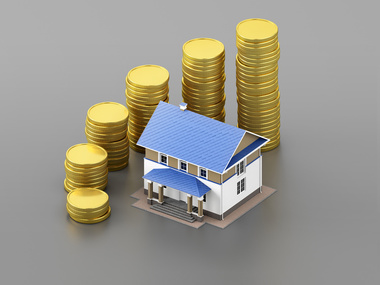
1. Home inspection. Once you have made an offer on a home, you will be required to have the home inspected. This is mostly for the benefit of the buyer — an inspection can uncover problems that can be costly down the road — but it is a $200-$600 expense that comes right on the heels of your down payment.
2. Home appraisal. At the same time as you have the home inspection done, you will need to have the home appraised by a lender-approved, independent certified home appraiser. This individual will assess your property's value based on several factors, including your home's specific features as well as the sale price of similar properties in the area.
3. Property taxes. Sure, everyone knows about these, but the amounts can vary wildly from one locale to another, so don't make assumptions. Check your rates early in the process. Once you agree to a mortgage, you will typically be required to set up an escrow account. Into this account, you will deposit a monthly amount that covers your mortgage in addition to 1/12 of your anticipated property taxes and homeowners' insurance. This helps to assure the lender that you will be adequately protecting and insuring their investment, but it is an extra monthly amount that you might not be prepared for.
4. Utility costs. Like taxes, these can vary wildly. If you are moving from an apartment into a home for the first time, you might be shocked by the discrepancy in your monthly utility bills. In general, it is cheaper and easier to keep an apartment heated or air conditioned since it is surrounded on every side by other units of a similar temperature. A stand-alone home does not have this luxury, so make sure you anticipate higher-than-usual utility bills after relocating.
5. Homeowners' association fees. If you live in a community that is overseen by a homeowners' association, you will usually be expected to pay annual dues. Be sure to anticipate this expense, because it can easily come in the form of a several-hundred-dollar bill at the end of the year.
6. Flood insurance. If you live in an area that is prone to floods or hurricanes, make sure you purchase an additional insurance policy; standard homeowners' insurance will not cover these natural disasters. Speak with your insurance agent about the need for flood insurance.
7. Long-term maintenance costs. New homeowners in particular tend to forget that they are solely responsible for all maintenance costs. While you might only encounter an expensive repair once every five to 10 years, it is important to have a long-term savings account dedicated to home repairs. Experts recommend allocating 1 percent of the home's value toward home repairs each year. For example, if your house is worth $300,000, you should try to save $3,000 annually toward home repairs.
Read on to learn some of the commonly overlooked costs that can shock new buyers.

1. Home inspection. Once you have made an offer on a home, you will be required to have the home inspected. This is mostly for the benefit of the buyer — an inspection can uncover problems that can be costly down the road — but it is a $200-$600 expense that comes right on the heels of your down payment.
2. Home appraisal. At the same time as you have the home inspection done, you will need to have the home appraised by a lender-approved, independent certified home appraiser. This individual will assess your property's value based on several factors, including your home's specific features as well as the sale price of similar properties in the area.
3. Property taxes. Sure, everyone knows about these, but the amounts can vary wildly from one locale to another, so don't make assumptions. Check your rates early in the process. Once you agree to a mortgage, you will typically be required to set up an escrow account. Into this account, you will deposit a monthly amount that covers your mortgage in addition to 1/12 of your anticipated property taxes and homeowners' insurance. This helps to assure the lender that you will be adequately protecting and insuring their investment, but it is an extra monthly amount that you might not be prepared for.
4. Utility costs. Like taxes, these can vary wildly. If you are moving from an apartment into a home for the first time, you might be shocked by the discrepancy in your monthly utility bills. In general, it is cheaper and easier to keep an apartment heated or air conditioned since it is surrounded on every side by other units of a similar temperature. A stand-alone home does not have this luxury, so make sure you anticipate higher-than-usual utility bills after relocating.
5. Homeowners' association fees. If you live in a community that is overseen by a homeowners' association, you will usually be expected to pay annual dues. Be sure to anticipate this expense, because it can easily come in the form of a several-hundred-dollar bill at the end of the year.
6. Flood insurance. If you live in an area that is prone to floods or hurricanes, make sure you purchase an additional insurance policy; standard homeowners' insurance will not cover these natural disasters. Speak with your insurance agent about the need for flood insurance.
7. Long-term maintenance costs. New homeowners in particular tend to forget that they are solely responsible for all maintenance costs. While you might only encounter an expensive repair once every five to 10 years, it is important to have a long-term savings account dedicated to home repairs. Experts recommend allocating 1 percent of the home's value toward home repairs each year. For example, if your house is worth $300,000, you should try to save $3,000 annually toward home repairs.
Tuesday, June 20, 2017
10 Ways to Save on Utility Bills During the Summer Months
The summer heat is often the culprit behind jumps in electricity
costs during the summer months, so do what you can now to conserve
energy and avoid additional costs as the weather heats up. If you're
looking to cut back on your spending throughout the summer, your utility
bills are great places to start when making changes to your everyday
life. 
Here are 10 ways to save on utility bills during the summer months, adopt an environmentally friendly lifestyle and avoid overspending on household expenses this year.

Here are 10 ways to save on utility bills during the summer months, adopt an environmentally friendly lifestyle and avoid overspending on household expenses this year.
- Switch Off the Lights When You Leave a Room – Turning off the lights when walking out of a room is a great way to curb your energy consumption in the summer.
- Use Rain as a Free Water Source – Collecting rainwater in buckets during a storm is an active way to cut down on your water usage while taking care of your yard this season.
- Close Your Blinds and Curtains During the Day – Keeping the heat out on bright, sunny days is an effective way to control your energy expenses this summer.
- Keep Doors and Vents Shut – Closing off parts of your house where you don't spend much time is a convenient way to limit cooling costs while at home during the summer.
- Spend Your Free Time Outside – Going out every day to embrace the warm weather and enjoy the great outdoors is a smart way to use less energy in the summertime.
- Find Creative Ways to Cool Down – Drinking ice-cold beverages and taking cool showers are small ways to save money on utilities while making the most of the summer.
- Put Wet Clothes Out on a Clothesline – Using the hot summer sun to dry your clothes after washing them is an effortless way to reduce utility bills and spend time outside.
- Monitor the Temperature on Your Thermostat – Setting a default number for your air conditioning is a simple way to keep your energy bills from rising when it's hot outside.
- Opt for Fans Instead of Air Conditioning – Circulating air throughout your home with fans is an economical way to cool down your living space while using less energy.
- Unplug Electronics That Aren't Being Used – Pulling out their cords when you're not using your electronics and chargers is an easy way to limit your energy usage this summer.
Wednesday, June 7, 2017
7 Ways to Choose the Best Neighborhood for You
If you're starting a family, you might want to consider a neighborhood known for its good schools. Or if your children have graduated, you might want to move to a "hipper" neighborhood. Perhaps your company has moved, and you want to be closer to work. Any of your priorities may have changed over the years. Here are seven ways to evaluate a possible move.

#1: Time the Commute to Your Job
Perhaps you have been spending hours stuck in traffic to and from work and are looking for a much shorter commute. Just because one neighborhood is closer does not mean that you will get there faster. Time the commute from the different neighborhoods you are considering.
#2: Meet the Neighbors
You want to get a feel for the neighborhood? Talk to the neighbors. Just by walking around the neighborhood, you'll get a vibe to let you know if it's right for you. Are the people a little standoffish? Are they hesitant to make eye contact with you?
Are people friendly and neighborly? Maybe a little too friendly and neighborly…? Take a walk around and strike up a conversation with your potential future neighbors to get a good feel for the community.
#3: Go for a Walk Around the Neighborhood
One of the best ways to pick the best neighborhood is to look around it. Go for a walk and drive through the neighborhood on the weekend and on weekdays. Do the same thing at different times of day. Note where there are areas that look a little unsafe or dilapidated. How will that affect your quality of life there?
#4: Attend a Local Festival or Event
Kill several birds with one stone by attending a local event or festival. You'll meet people in the neighborhood and get a sense of the type of community that it is; is it tight-knit? Young? Too old? A little too country? Local events can tell you a lot about the spirit of the neighborhood.
#5: Go Out to Eat at a Local Hot Spot
While you're checking out houses, go to a popular eatery in the neighborhood. Check out the vibe and take note of people's moods. Do they look at you suspiciously? Is the customer service lousy? Is it great and are the people great? You can glean a lot about a neighborhood by simply people-watching at a diner.
#6: See a Play or a Game at a Local School
If you have kids, the quality of the local schools in your neighborhood may be priority No. 1. Before you buy a house and enroll the kids, visit the school. Go to a school play or watch one of the local school's sports teams to get a feel for the level of community support for the school and athletics.
#7: Read About the Local Job Market/Main Industries
Having a job today does not guarantee that you'll have one tomorrow. And even if you do, it's important to know if you are moving into a neighborhood that is growing and thriving or one that is crumbling. Get a local paper and read about the main industries in the area and the state of the local job market.
Subscribe to:
Posts (Atom)